
Students explore industries across the globe through Sustainability Summer Internship Program
A new employer-funded program invites Stanford students from all disciplines to discover how their passions can help meet sustainability goals, expanding the school’s robust internship offerings.

This summer, 25 Stanford students gained on-the-job skills through the new Sustainability Summer Internship Program at the Stanford Doerr School of Sustainability. From frosh to graduate students, they spanned 11 industries in four countries on four continents.
Nearly 400 students from 62 majors across all seven schools applied to the program in 2025, highlighting how sustainability crosses disciplines and fields of study. The initiative, which aims to empower all Stanford students to explore how their passions intersect with sustainability, has been part of Arun Majumdar’s vision for the Doerr School of Sustainability since he was appointed the school’s inaugural dean in 2022.
“There really is no better way for our students to both complement and apply their education than through an internship,” Majumdar said. “These unique opportunities help students gain invaluable experience, explore their interests, make an impact, and foster connections that will support their success long after they graduate.”
After the program’s 2024 pilot successfully placed five interns at four organizations, the Sustainability Summer Internship Program met its goal of placing 25 interns this summer. Now, it’s aiming to expand so that even more students can experience how their skills can help meet the world’s sustainability needs.
National energy storage company esVolta began as a partner during the pilot year with funding from the law firm Orrick, Herrington & Sutcliffe LLP and found so much value in the program that it decided to directly fund an internship position in 2025.
Ishrita Pol, a senior in the Earth Systems Program from Dallas who started a coterminal degree in civil and environmental engineering this fall, said she was drawn to the Sustainability Internship Program by the diversity of options. While she had experience in sustainability through past internships, Pol was excited to work specifically in renewable energy and batteries at esVolta.
“Because they have so many internship opportunities available across a variety of sectors, I think students are really able to pick and choose what exactly it is that piques their interest,” she said.
How the program works
The paid internships, which generally last eight to 10 weeks, are funded by the employer and designated specifically for Stanford students.
Joyce Lee, the internship program manager, said the program is designed to “bridge the gap between classroom learning and real-world practice.” It offers positions at companies, adding to more than 100 sustainability internships already offered through multiple programs at the Doerr School of Sustainability, including the Environment and Policy Internships (EPIC), Shultz Energy Fellowships, and TomKat energyStartup Summer Internships, and the Ecopreneurial Summer Internship Program in partnership with the Graduate School of Business.
For the new program, the Doerr School of Sustainability collaborates with companies and organizations to identify roles where interns can gain professional skills while contributing value for the employer. Lee works with each employer to create opportunities that reflect students’ interests and academic backgrounds across disciplines while fulfilling company needs and skill requirements. Once student applications are collected, the employers take the lead on hiring.

Students are fully integrated into the workplace, Lee said, which helps them feel supported and connected as part of the team. They participate in all-hands meetings, benefit from mentorship and feedback, and experience firsthand what it means to begin a professional career.
“We are looking at this as long-term career pathways for students, not just a one-off summer job,” Lee said. “We want them to be able to explore where sustainability intersects with their academic background and career goals, how the industry operates, and how they can translate their learning into meaningful practice.”
Benefits to students
To prepare students like Pol to get the most out of their internships, the school offered support throughout spring quarter.
For example, Lee partnered with Career Education at Stanford to provide a workshop on career goal-setting, networking, and navigating workplace etiquette, which encouraged students to see how the internship could shape their long-term career growth.
Staff members also check in with students during their internships. Though he was 10,000 miles away in New Zealand, interning at Auckland Football Club, Reilly McKnight said he felt supported by the program staff throughout his experience.
McKnight, a junior computer science major from San Francisco, said he also appreciated opportunities to meet up with the program’s other New Zealand-based interns for adventures around the country. While his job gave him professional experience, the location gave him life-changing cultural immersion.
“This program is incredibly unique, and I definitely hope for the future that it’s going to continue to expand,” he said.
Roles across sectors
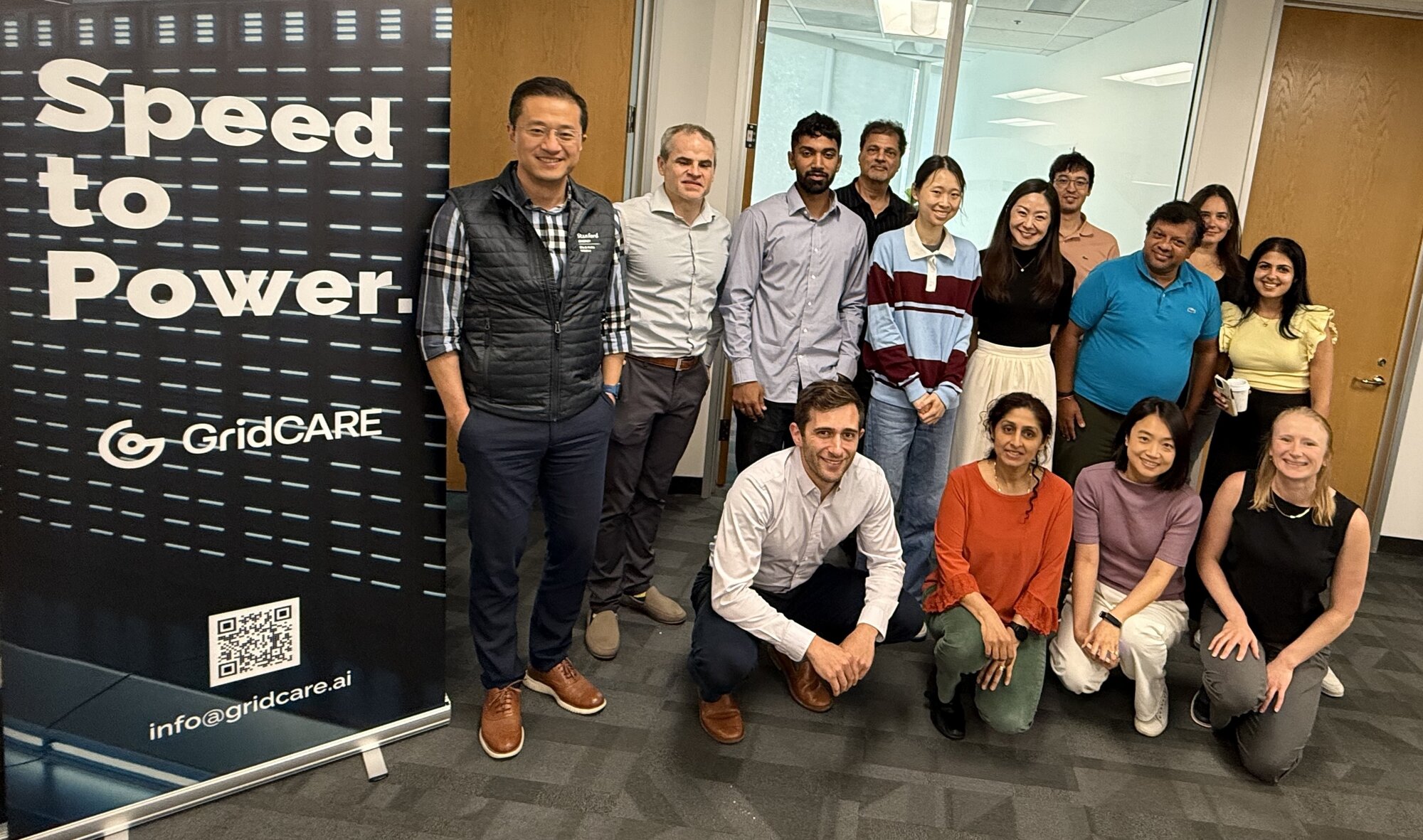
This year’s 21 participating employers represent 11 industries in energy and climate, in addition to fields such as architecture, business consulting, manufacturing, and sports, where sustainability plays a role within the larger organization.
“We’re proud to offer opportunities with organizations that are deeply invested in our students’ growth,” Lee said. “They don’t just host interns – they mentor them, challenge them, and help them grow into changemakers.”

Most of the employers that participated in the first two summers have connections to Stanford, but the school is seeking to expand that network. Lee hopes to build multi-year connections that create continuity and mutual benefits: Employers gain streamlined recruiting and access to exceptional Stanford students, while the students become part of a valuable professional network.
Maddy Foote, esVolta’s director of sustainability, supervised intern Pol as she worked on an emissions tracking project and other tasks for the company.
“Having younger people come in and work on a discrete project like the one that Ishrita was doing on carbon emissions impact is extremely helpful,” Foote said.
Foote was impressed by the caliber of applicants from across Stanford. “I think that is really heartening and exciting for someone who is currently in industry to see the next generation come through,” she said. “I don’t think there’s really any downside to bringing on an intern through the Doerr School, because it’s just been a fantastic program. We, for one, hope to continue for as long as possible.”
Visit the program's contact page for more information.
Explore More
-
A culmination of the efforts of the Undergraduate Sustainability Education Working Group, a new report recommends a multifaceted approach to integrate sustainability-related learning across the undergraduate curriculum and support students with varying motivations and needs.
-
Through programs offered by the Stanford Doerr School of Sustainability, undergraduate students from Stanford and institutions across the U.S. worked on projects that tackled pressing environmental challenges and advanced fundamental knowledge about our planet. Here’s an inside look at their experiences.
-
Six summer programs for undergraduate students are under the umbrella of the Doerr School of Sustainability, creating a new cohort across disciplines.


