
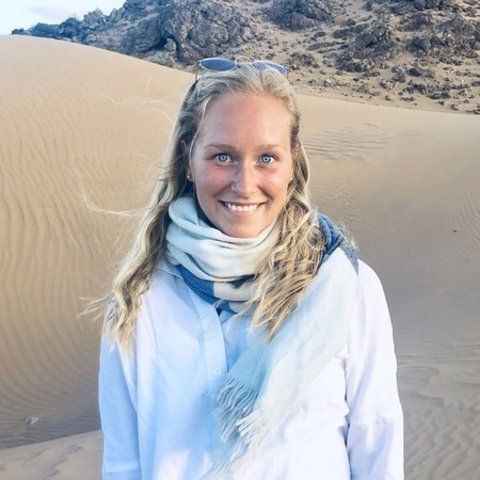
“I used to think of sustainability only as a way to protect the environment and solve climate change,” said Jessa Clark, MS ’19. “The SUST program taught me that sustainability is a process that challenges us to work together to dream up a better world and take action to make that world a reality.”
As a Sustainability Science and Practice (SUST) student, Clark applied new ways of thinking, leadership skills, and analytical frameworks to real-world problems. Now she works to apply those teachings to finding real-world solutions.
In her current role as a Sustainability Consultant for Peak Sustainability Group in Bellingham, Washington, Clark develops sustainability plans and reports to measure progress on social, economic and environmental impacts for a local coffee company, Tony’s Coffee, and two multinational packaging firms.
“Everyone has their part to play in making this vision of a sustainable world come to life, and I find it incredibly inspiring to work with individuals, communities, and businesses to identify their role in the larger vision, innovate to achieve their goals, and grow to be leaders in the global sustainability movement.”
Clark began her role during the 2020 global pandemic after international travel lockdowns kept her in Thailand for two months. Being isolated in a hostel on the Railay peninsula with travelers from around the world was an unforgettable experience. “I became part of a wonderful community that came together from many different backgrounds and cultures to stay safe from the virus and care for each other through an uncertain time in an unfamiliar place. I often think of that in my work today: so many of our global challenges – like the pandemic, climate change, or any number of other systemic problems – have incredible potential to spark empathy and bring people from diverse backgrounds together, because ultimately we are all affected by these issues.”
Explore More
-
Stanford’s Sustainability Accelerator convened more than 300 researchers, investors, entrepreneurs, and alumni on campus to learn about greenhouse gas removal and how 18 teams are seeking to enable it on a large scale. Explore highlights from the event.
-
Segall’s election brings to 8 the number of Stanford Earth faculty who are members of the National Academies of Science or Engineering.
-
Geological Sciences professor Jon Payne discusses a range of life experiences, from hobbies and home life to the trials and successes of his research.


